A post-discharge recovery platform with daily video check-ins, AI-assisted patient communication, and personalized care plans that help patients stay engaged after leaving the hospital.

“Recovery used to stop at the hospital door. Now we can see how patients are doing for weeks after discharge and identify problems much earlier.”
— Head of Care Coordination, Partner Hospital
Post-discharge care often depended on a printed set of instructions and the patient’s ability to remember what to do at home. Patients could forget medication schedules, miss important warning signs, or struggle to understand what symptoms required attention. Families were not always sure what to monitor, and care teams often did not learn that a patient was having difficulty until a follow-up appointment—or a return visit to the emergency department. Patient notes, medication information, and phone conversations were frequently spread across different systems, while front-desk staff spent time answering routine calls without a consistent way to record or escalate what patients reported.

“Patients could go several days without hearing from us. After surgery, that is a long time for someone to feel unsupported or unsure about their recovery.”
— James Patel, Post-Acute Care Manager
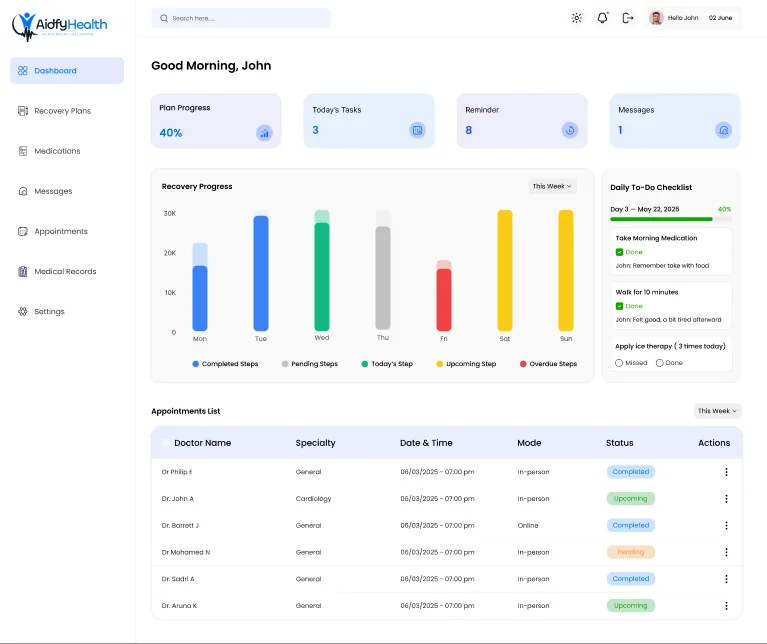
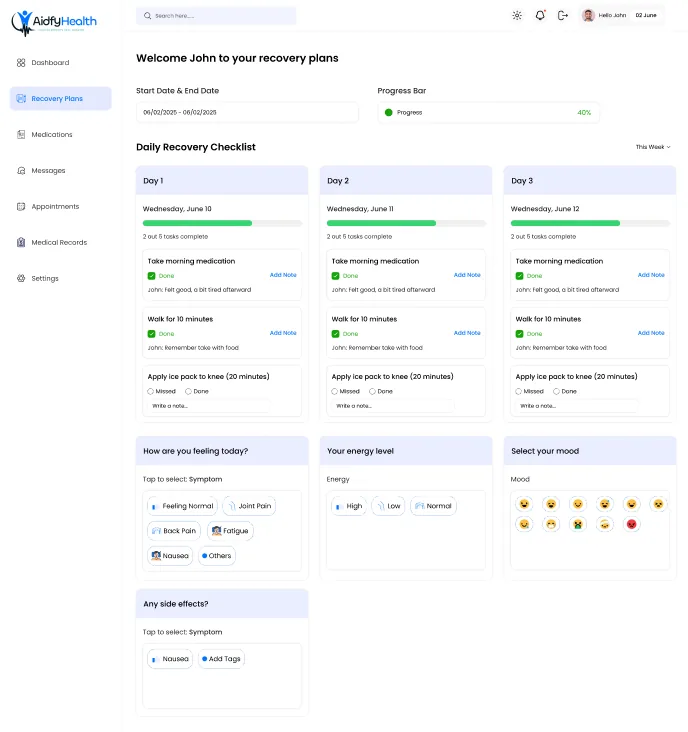
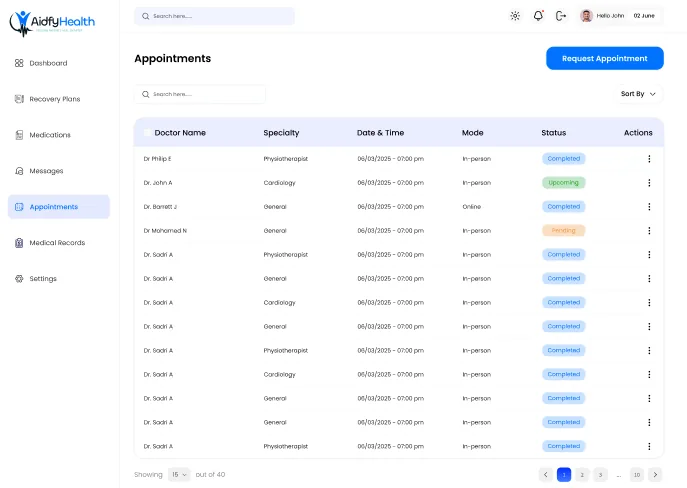
AidfyHealth combines personalized recovery plans with regular communication between patients and care teams. Depending on the procedure—such as a knee replacement, C-section, stent procedure, or stroke recovery—care teams can create a plan with relevant tasks, medication reminders, symptom check-ins, and follow-up appointments. Patients access the plan through a secure link sent by text or email, so there is no app to download or remember to install. The platform also supports daily video visits with a doctor. Behind the scenes, an AI receptionist handles routine communication by recording patient responses, answering common questions, and identifying issues that require human attention. Escalation rules can flag missed check-ins, concerning symptoms, or changes in recovery so the care team can respond promptly.
“The platform felt like it was designed by people who had actually been part of a discharge process. It reflected how recovery works in real life, not just how it looks on paper.”
— James Patel, Post-Acute Care Manager
Care teams gain a clearer view of how patients are progressing instead of waiting until the next appointment. Daily video check-ins provide regular contact, while the AI receptionist captures routine questions and responses that might otherwise be lost in voicemail. Missed medication tasks, incomplete check-ins, and concerning symptom trends can be identified on the same day. Since patients access the platform through a link rather than a separate app, completing the recovery plan feels simpler and more accessible. For care teams supporting many patients at once, this creates an opportunity to identify problems earlier and focus human attention where it is most needed.
“I used to learn that a patient was struggling only after they missed a follow-up. Now I can find out the same day, while there is still time to respond.”
— James Patel, Post-Acute Care Manager
AidfyHealth keeps the patient experience simple while giving care teams continuous visibility. The platform works quietly in the background, remains HIPAA-compliant, and can support organizations as their patient volume grows.
The period after discharge used to be a major blind spot. Patients were expected to manage their recovery at home, while care teams often had little visibility until the next appointment or an unexpected return to the hospital.
AidfyHealth combines daily doctor check-ins, procedure-specific recovery plans, AI-assisted communication, and automated escalation rules to close that gap. Patients receive practical support at home, while care teams can identify concerns earlier and devote more time to the people who need direct attention.
“AidfyHealth gives us a daily view of how patients are really doing at home and takes routine communication off the front desk’s workload.”
— Head of Care Coordination, Partner Hospital