A multi-tenant healthcare platform where patients can describe their needs, find the right specialist, pay, and book appointments through WhatsApp—while doctors, administrators, and hospital owners work from one connected system.

“Our front desk used to be the bottleneck for almost everything. Now many of our bookings happen through WhatsApp before the clinic even opens.”
— Hospital Admin, Partner Clinic
Patients typically had to call the clinic, wait for someone to answer, or visit in person to request an appointment. During busy periods, front-desk staff could not respond to every inquiry, which meant missed bookings and long wait times. The problem continued after the initial contact. Without an effective triage process, routine questions and urgent cases could enter the same queue, and patients were sometimes matched with the wrong specialist. Doctors, administrators, and hospital owners also lacked a shared operational view. Information was scattered across spreadsheets, messaging groups, and shared logins, with little separation between what each role could see or manage. Payments and doctor payouts were often tracked manually, making it difficult to know what had been collected, what was pending, and what was ready to be released.


“We had patients being scheduled with doctors who were not the right specialists simply because there was no reliable way to triage the request beforehand.”
— Doctor, Partner Clinic
Patients begin by messaging the hospital through WhatsApp. The AI agent asks relevant questions, understands the patient’s request, and recommends the appropriate specialist based on the clinic’s services and real availability. It then sends a payment link within the same conversation. Once payment is completed, the appointment is confirmed and the necessary notifications are sent automatically. Consultations can take place through Zoom. Payments are held until the appointment has been completed, helping protect the hospital from cancellations and no-shows before the doctor becomes eligible for a payout. After the consultation, the doctor can request payment, and an authorized administrator reviews and approves the request. Role-based access keeps the system organized: doctors see their own patients and earnings, hospital administrators manage the operational areas assigned to them, and super administrators oversee the wider platform.

“It is not just a chatbot added to our booking page. It understands which specialist the patient needs and collects payment before the appointment is confirmed.”
— Hospital Admin, Partner Clinic
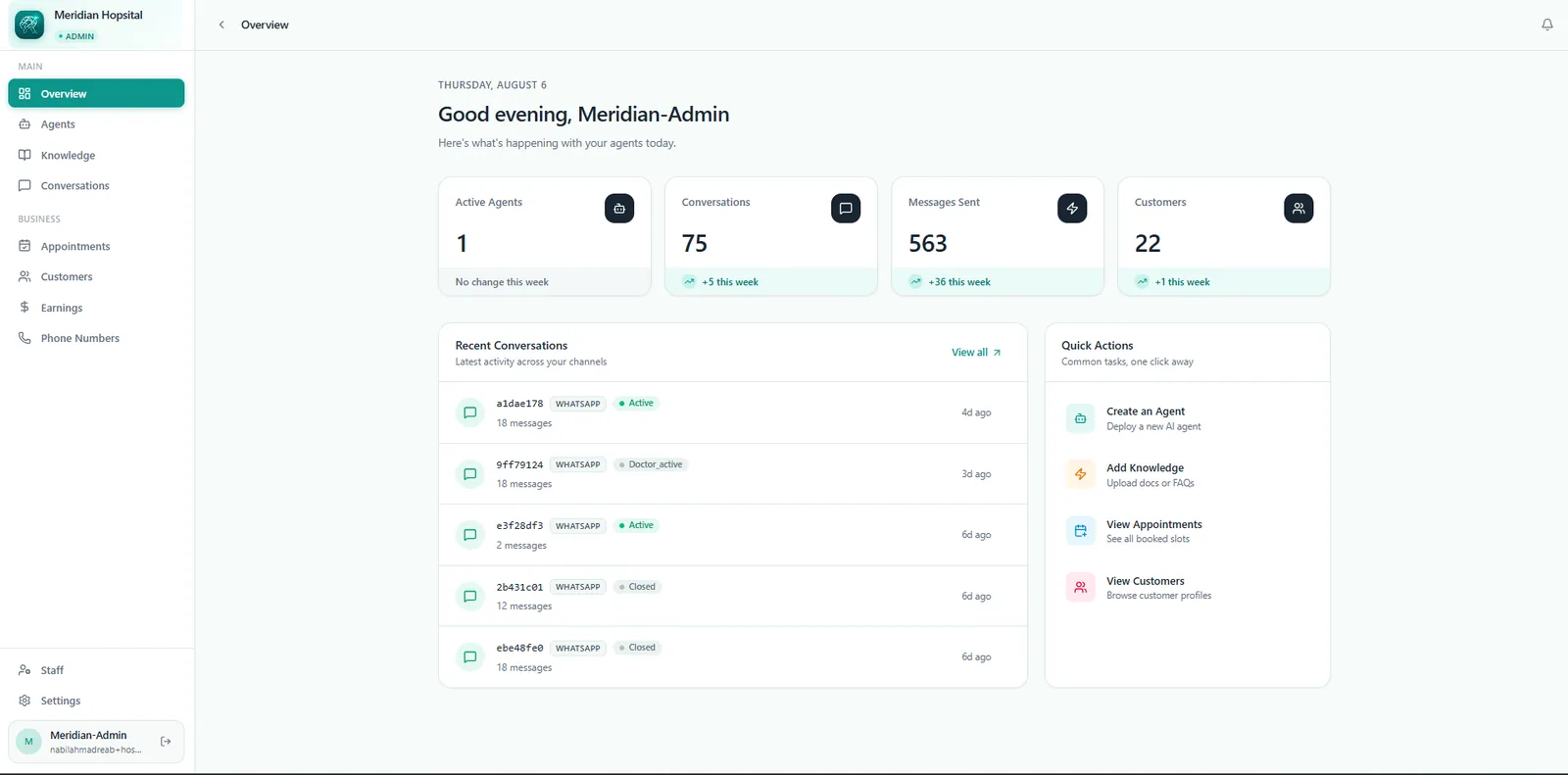
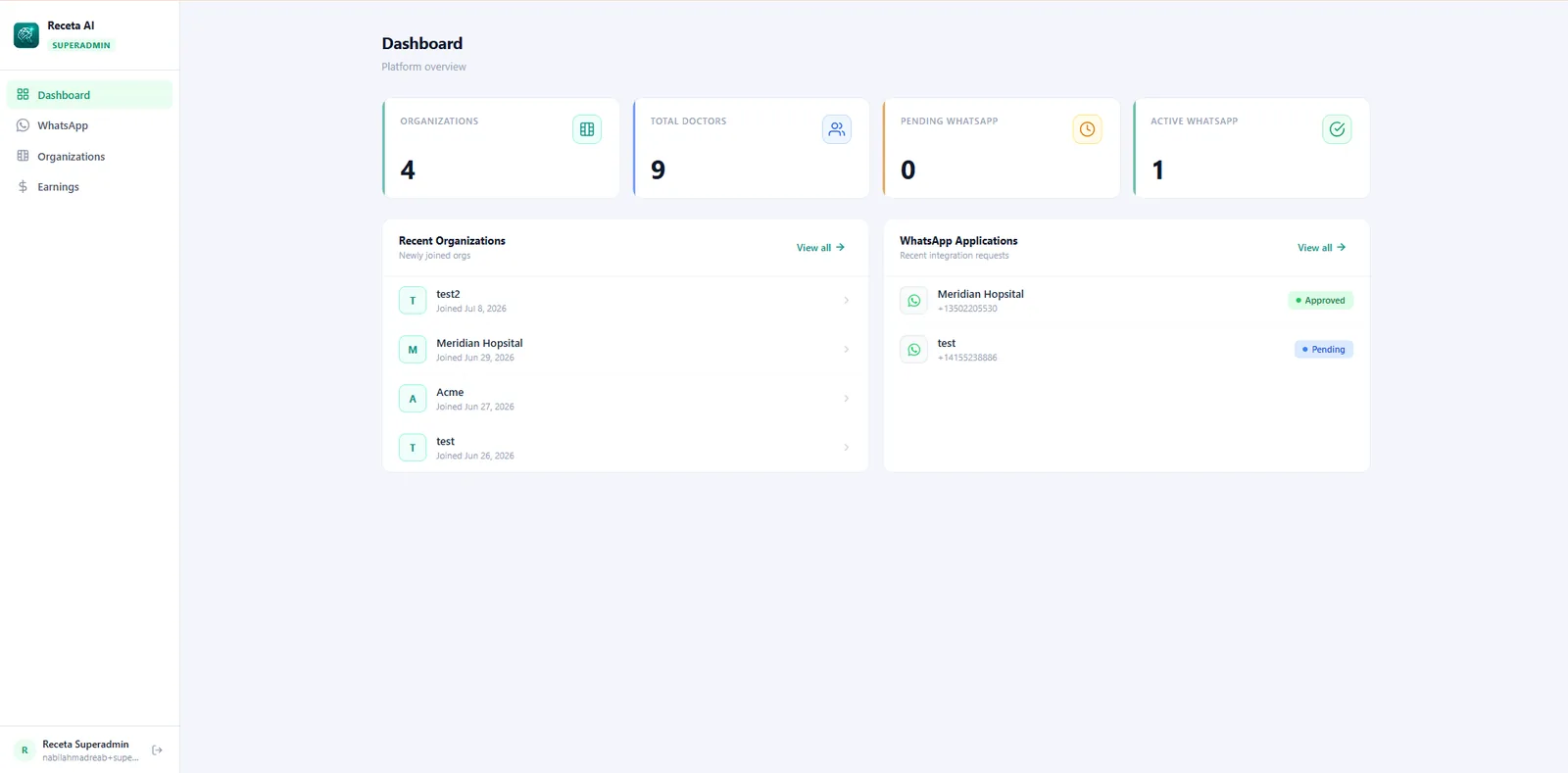
Many appointment requests can now be handled without a phone call. Patients complete the initial triage through a familiar WhatsApp conversation, pay before the appointment is confirmed, and are directed to the appropriate specialist. Doctors can view their schedules, earnings, pending balances, and payout status from their own dashboards. Payout requests must pass through an authorized administrator before funds are released. Hospital administrators have a central view of appointments, payments, staffing, and workloads, along with an Agent Builder for training the AI on hospital-specific documents and processes. Access remains controlled by role, so not every administrator can approve payouts or modify the AI configuration. Each hospital also operates in a separate environment with its own Twilio subaccount and WhatsApp number, allowing Receta AI to onboard additional hospitals without affecting existing operations.
“For the first time, we can see what patients are paying, what our doctors are earning, and where each payment stands in one place.”
— Hospital Owner, Partner Clinic
Receta AI brings booking, triage, payment, and practice management into one connected system that patients can access through WhatsApp and healthcare teams can manage through role-specific dashboards.
Patients were already comfortable using WhatsApp. Asking them to make more phone calls or complete lengthy web forms only added friction to the booking process. Receta AI meets patients in the channel they already use and builds triage, scheduling, and payment into the same conversation.
The platform also connects the operational layers behind that conversation. Doctors manage their own practices, hospital administrators oversee appointments and approve payouts, and super administrators manage the broader platform and onboard new hospitals. Together, these role-based systems give healthcare organizations a clearer and more controlled way to manage patient access and daily operations.
“Patients message us the way they would message a friend. By the time the appointment reaches our team, it has already been triaged, scheduled, and paid for.”
— Hospital Admin, Partner Clinic